What Is a True Chassid?
Translated from the Hebrew original.
This week is dedicatedWould you like to dedicate this week's Torah? Dedicate
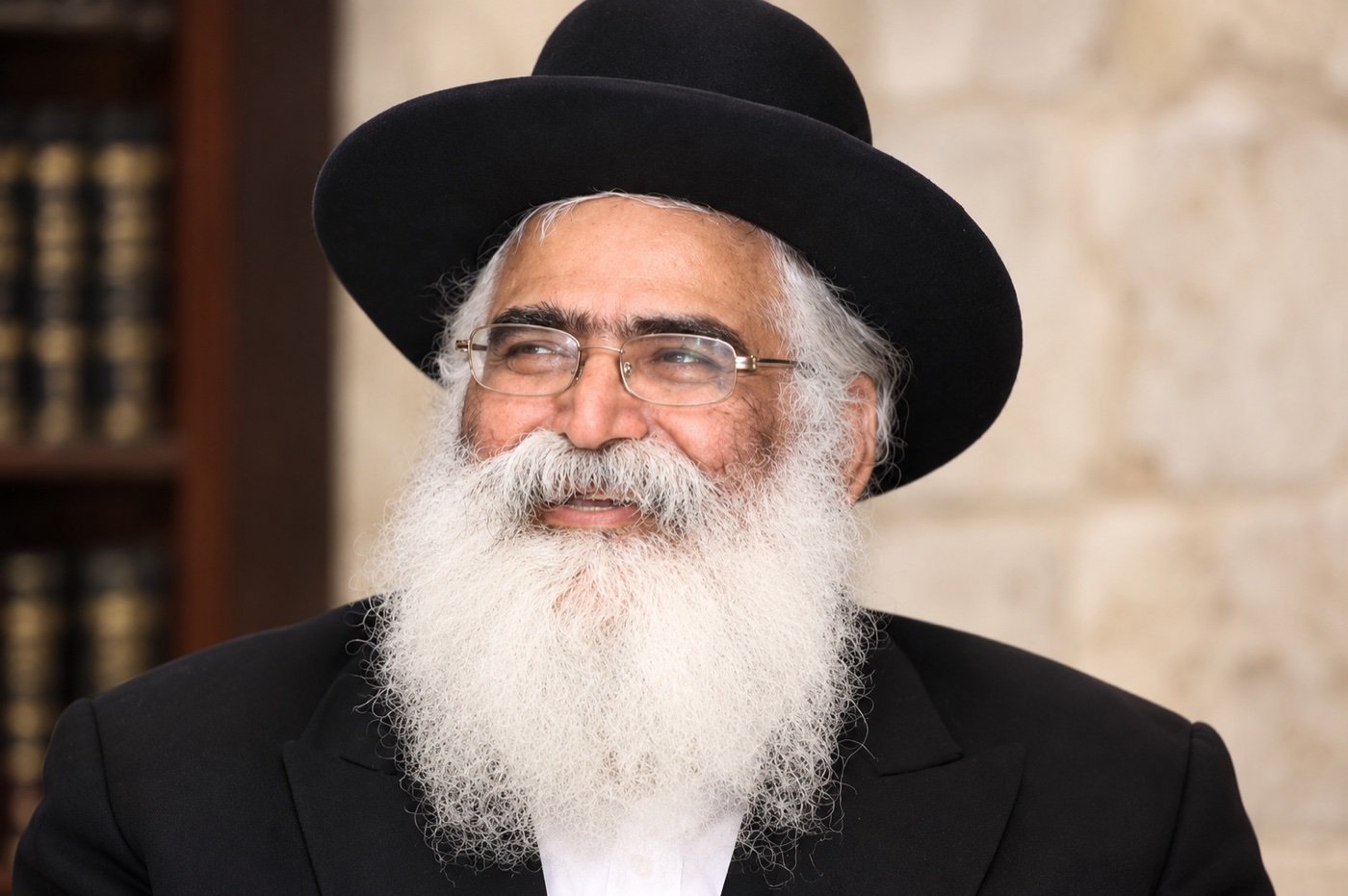
A story about Rav Yoram
Rare are the times when a person merits to see with his own eyes the reward of the mitzvah “and you shall do according to all that they instruct you,” and rarer still are the times when a person sees it immediately. Moshe, one of the faithful chassidim of our father and teacher, Rav Yoram Abergel zy”a, merited to see it tangibly, and he relates:
“One evening a fundraising evening was held for the Rav’s holy yeshiva in Kfar Gvirol. As is customary, at the end of the evening everyone went out after the Rav and accompanied him to the car, and each one approached the Rav to say thank you and goodbye and to ask the Rav to bless him. After some three or four people, suddenly the Rav says to me: ‘Moshe, close the door immediately,’ and I immediately closed the car door as the Rav had asked.
“Behind me stood someone who was a bit angry with me and said to me: ‘Listen, I have no children and I wanted the Rav to bless me. What are you doing to me? Because of you I’m not getting a blessing…’ I said to him: ‘Whatever the Rav says, I do. I cannot argue with him. The Rav asked to close the door – I close the door.’
“The Rav drove off perhaps about a hundred meters from us, and all the people who had gone out after the Rav began to head back toward the house.
“And suddenly, after less than a minute, a car with two drunk men arrived at high speed. They tried to press the brakes but they had no brakes, and they crashed into the car that was parked near the place where the Rav’s car had been parked earlier. That car was pushed and thrown exactly toward the place where we had all been standing earlier when we went out after the Rav, and was crushed against the wall that was there. Had we, Heaven forbid, still been there at those moments, we would all, Heaven forbid, have been crushed against the wall…
“I was truly shaken. The Rav had gone some distance of a hundred and fifty meters, and I immediately called the Rav and told him what had happened. Then the Rav said to me: ‘When I was sitting there in the car I saw the Angel of Death dancing next to you, so I drove away from there quickly. I preferred that he hit the trash bins and not hit people…’
“I told the friends there what the Rav had said, and that Jew who had been angry with me also heard what I told, and then he came and asked my forgiveness. I said to him: ‘Now you have seen that when the Rav says something, one must do it immediately!’”
On the greatness of cleaving to the tzaddik and self-nullification before him, Rabbeinu spoke in the book “Imrei Noam” on Parashat Lech Lecha
Eliezer was considered spiritually like hundreds of people
When Avraham Avinu went out to fight against the four kings, he took with him to war “his trained men, born in his house, three hundred and eighteen” (Bereshit 14:14).
Chazal, with their holy spirit, reveal to us that in truth Avraham did not take with him three hundred and eighteen men, but only Eliezer his servant. And what is said in the verse, “three hundred and eighteen,” refers to Eliezer, whose name equals this number in gematria; and the two of them alone defeated all four kings and their armies.
One can indeed learn from this about the great physical strength that Eliezer had; but even more than this, one can learn from it about Eliezer’s spiritual strength. This is according to the novel insight of the Tanna Rabbi Yonatan ben Uziel, in his Targum on the above verse, that Eliezer the servant of Avraham was the son of Nimrod the wicked. When Eliezer saw that his father threw Avraham into the fiery furnace and he came out of there in peace, without any harm, he immediately left the way of his wicked father and cleaved to Avraham Avinu with all his strength.
One of the four kings against whom Avraham Avinu fought was “Amrafel king of Shinar,” who was none other than Nimrod, the father of Eliezer. It emerges that because of the command of Avraham Avinu, Eliezer went out to fight against his own father, removed from his heart the natural love of a son for his father, and gave over his very soul to do the will of his Rebbe. And this was because of the tremendous self-nullification that Eliezer felt toward Avraham his Rebbe.
A chassid is one who nullifies himself before his Rebbe without recognizing any other person
As it is told, once they asked the holy Rebbe Yitzchak Meir of Gur zy“a: what is the true definition of a chassid?
The Rebbe answered them that the answer to this is written explicitly in the Torah, in what Moshe Rabbeinu said before his passing to the members of the tribe of Levi: “Your Tumim and Your Urim belong to Your pious one (chassidecha), whom You tested at Massah and with whom You strove at the waters of Merivah; who said of his father and of his mother, ‘I have not seen him,’ and his brothers he did not recognize, and his children he did not know” (Devarim 33:8–9).
That is to say: a true chassid is one who, when his Rebbe asks him to do something, at that moment does not recognize anyone in the world – not even his father and mother, his brothers and his children – but immediately and at once runs to do what his Rebbe commanded him.
Therefore specifically Eliezer is called “the servant of Avraham” – something we do not find with anyone else of the members of Avraham’s household and his many servants – to indicate the greatness of the self-nullification that Eliezer had toward Avraham, more than anyone else in the world. And in the merit of the self-nullification that Eliezer had toward Avraham his Rebbe, he became a fitting vessel to receive all the deep Torah of his Rebbe, as Chazal said, that Eliezer “had mastery over his master’s Torah,” and also that he “drew and gave others to drink from his master’s Torah.”
In brief
a. Eliezer was considered spiritually like hundreds of people, since he left the way of his father Nimrod the wicked and cleaved to Avraham Avinu with complete self-nullification, to the point of fighting against his own father.
b. This is the trait of true chassidut, through which a person becomes a fitting vessel to receive all the Torah of his Rebbe.