
Her Ways Are Ways of Pleasantness
Translated from the Hebrew original.
This week is dedicatedWould you like to dedicate this week's Torah? Dedicate
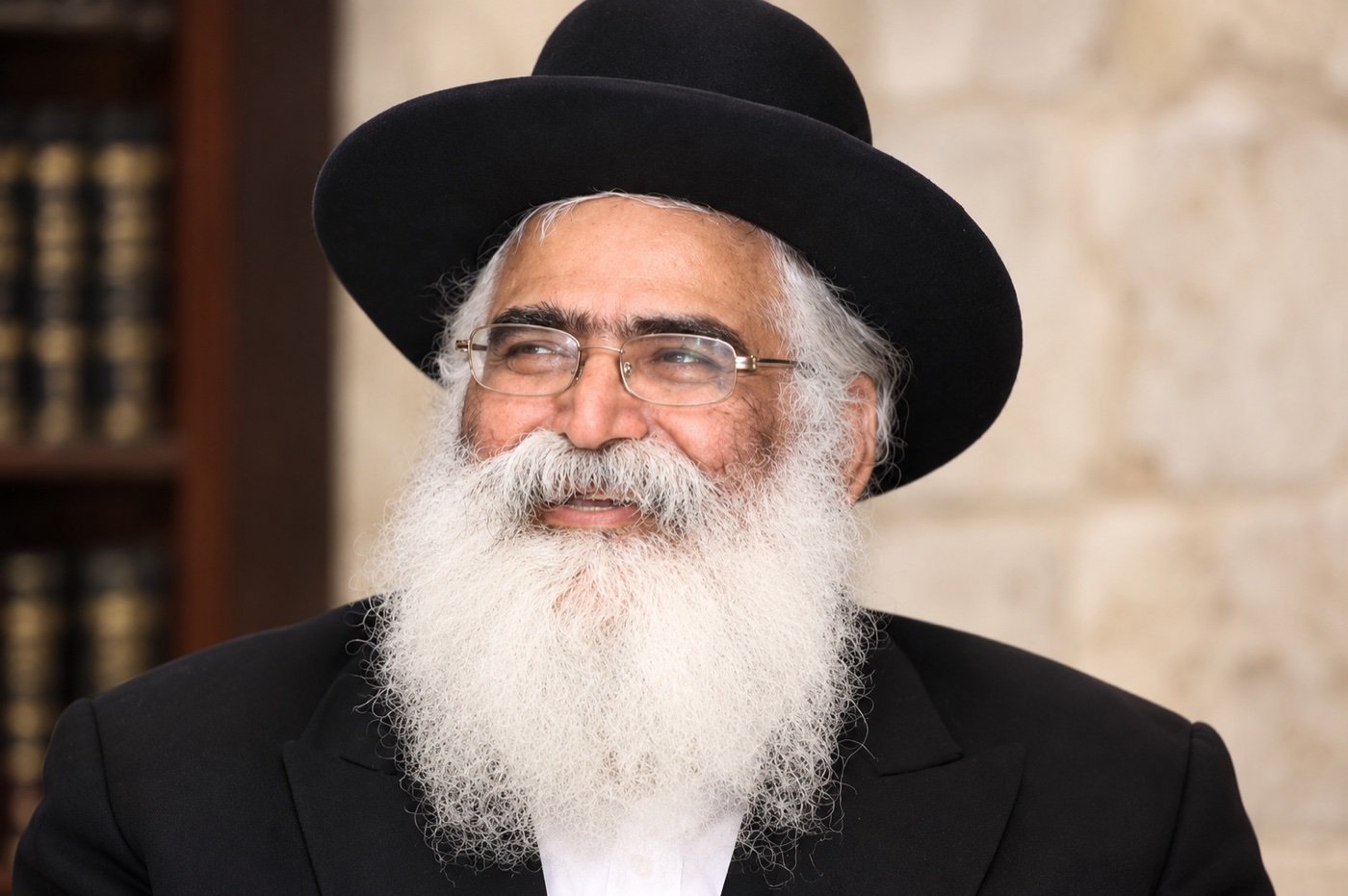
A story about Rav Yoram
The way of our father and teacher, Rav Yoram Abergel zy”a, in all his service was a way of pleasantness, a way of love. It is not for nothing that many who met Rabbeinu, even just once, testify that they felt his love for them – in the gaze of his pure eyes, in a genuine and pure smile, and in the warm feeling he gave to everyone before him, no matter where that person stood on the ladder of spiritual levels… Rabbeinu would look at the burning heart of a Jew, and not at the color and size of his kippah. And so he educated us, his students, and bequeathed to us always to conduct ourselves in a way of pleasantness, love and peace.
On this matter Rabbeinu related:
“I remember when we opened our yeshiva a few years ago, one of the avrechim who studied with us bought a home from the contractor and found a few defects in it. One day he came to me and said that he was going to sue the contractor in court. After he left the doorway of the yeshiva, I sent a messenger after him to tell him: ‘From the door through which he went out, he should not come back again.’ He was frightened – after all, we had received him nicely into our yeshiva, with a shining countenance – and he began to ask, ‘Why, why?’ I said to him: ‘Our city is different from other places.’ He did not understand my intention. I said to him: ‘There are places where anyone who has a problem with his fellow immediately summons him to a din Torah; there are many batei din there… all day long they are busy with lawsuits. But here this is a city of kindness. If you wish to remain in our yeshiva and study with us, give up the lawsuit, even if you have to stay with all the defects in the apartment; or else go and study in another kollel, and quarrel with people all day long.’ He went, and never came back to us. From that day on he only suffered. Wherever he arrived, they rejected him, and so he moved from kollel to kollel, from bad to worse, and in the end nothing came of him. Why? Because he went in the wrong way. It is always better to make a compromise, and in this way one prevents all the needless quarrels.”
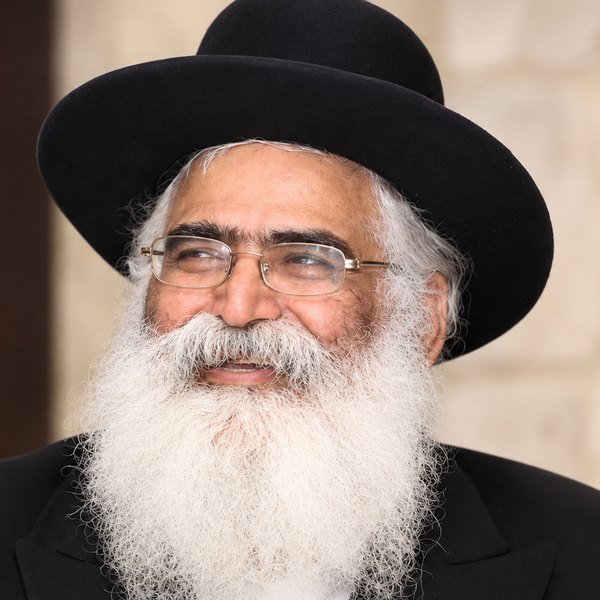
On the proper way to conduct oneself in exile, Rabbeinu spoke in the book “Imrei Noam” on Parashat Vayishlach
Parashat Vayishlach is a parasha unique in its kind. Every single detail in this parasha alludes to the events that the people of Israel will pass through while in the exiles under the hand of the children of Esav and also the children of Yishmael – including the final exile in which we find ourselves.
Therefore it is fitting and proper to call our parasha as the holy Shelah called it in his introduction to our parasha: “the pillar of the exile,” since it comes in its entirety only to teach us how to conduct ourselves in the time of exile in order to endure it and to pass through it in peace.
This opening is founded on the words of the holy one of Hashem, the honored Ramban, zlh“h, in his introduction to our parasha, and these are his holy words:
This parasha was written to make known that Hashem saved His servant and redeemed him from the hand of one stronger than he… And there is in it further an allusion for the generations, for everything that happened to our father with Esav his brother will always happen to us with the children of Esav, and it is fitting for us to hold fast to the way of the tzaddik.
We learn from the holy words of the Ramban that all the deeds that Yaakov Avinu did in preparation for his meeting with Esav the wicked, who wanted to kill him, as well as in the meeting itself, were meant to teach us how we must conduct ourselves with the nations of the world while we are pursued under their hand – “and it is fitting for us to hold fast to the way of the tzaddik.”
Yaakov acted in three ways as he went toward Esav
What is the way of that tzaddik, Yaakov Avinu a“h? We can learn this from the words of Rashi in our parasha, who brings the words of Chazal in the Midrash that as Yaakov Avinu went toward Esav his brother, he prepared himself for three things: for a gift, for prayer and for war.
That is to say: first and foremost Yaakov Avinu chose to act with ways of pleasantness and to try to appease Esav the wicked through a large and honorable gift. For this purpose Yaakov prepared an exceedingly great tribute, which included: “two hundred she-goats and twenty he-goats, two hundred ewes and twenty rams; thirty nursing camels and their young, forty cows and ten bulls, twenty she-donkeys and ten foals” (Bereshit 32:15–16).
At the same time, Yaakov Avinu held fast to the service of prayer, and prayed to Hashem from the depths of his heart: “Save me, please, from the hand of my brother, from the hand of Esav, for I fear him, lest he come and strike me, mother with children” (Bereshit 32:12). Yaakov Avinu knew without a shadow of a doubt that without true prayer to Hashem Yitbarach there is no possibility in the world that anything will succeed.
Only if, after all this, Esav the wicked would still want to harm him and the members of his family, did Yaakov Avinu also prepare to go out to war against him. But this option Yaakov Avinu pushed to the bottom of the list of possibilities, since he knew that nothing is gained from war. At the end of every war there are heavy losses to both warring sides together – losses of lives that can never be restored. Therefore one must strive with all one’s strength to avoid it as much as possible.
Indeed, this conduct of Yaakov Avinu, with ways of pleasantness and with great submission before Esav his brother, had its effect and melted the heart of stone within him. Regarding this the Midrash applies the words of Shlomo HaMelech: “Wisdom is better than weapons of war” (Kohelet 9:18). That is: the wisdom of Yaakov Avinu was better than all the weapons of war that Esav the wicked had prepared to fight him. For Yaakov Avinu, in his great wisdom, saw fit to act precisely in a way of submission and conciliation, and thereby succeeded in making all the weapons of war that Esav had brought with him drop from his hands.
With ways of pleasantness and conciliation one can break a crack in Esav’s wall of hatred
At the moment that Yaakov came with all the members of his family and they bowed down before Esav the wicked, Esav’s compassion was stirred toward them, and he removed from his heart that malicious intention to harm them, Heaven forbid – as it is said: “And Esav ran toward him, and embraced him, and fell on his neck, and kissed him, and they wept” (Bereshit 33:4). And as Rashi explains there: his compassion was aroused when he saw him bowing all these bows.
Rashi adds the words of Rabbi Shimon bar Yochai: It is a known halachah that Esav hates Yaakov; but his compassion was stirred at that moment and he kissed him with all his heart. That is to say: just as every halachah in the Torah is an eternal thing that cannot be changed, so too the fact that “Esav hates Yaakov” is eternal for all generations and cannot be changed. But even so, through conduct with ways of pleasantness and conciliation, as Yaakov Avinu conducted himself with Esav his brother, one can succeed in breaking a crack in this wall of hatred and arousing in the cruel heart of the nations a spark of compassion for the people of Israel, even if only for a short time.
Now the soul of Yaakov Avinu returned and sparkled forth in the soul of the holy Tanna Rabbi Yehuda HaNasi. Therefore he was called by the title “HaNasi,” for it is an acronym of “Hu Nitzotz Shel Yaakov Avinu” – “he is a spark of Yaakov Avinu.” He was also called “Rabbeinu HaKadosh” (our holy teacher), corresponding to Yaakov Avinu’s having instituted the blessing of “HaKel HaKadosh” (the holy God). And the soul of Esav the wicked returned and was reincarnated in the soul of Antoninus, king of Rome.
Therefore Rabbi Yehuda HaNasi conducted himself toward Antoninus, king of Rome, in exactly the same way that Yaakov Avinu conducted himself in his meeting with Esav. As explained in the Midrash, every time Rabbi Yehuda HaNasi had to go to the palace of King Antoninus, he would first study Parashat Vayishlach, in order to remind himself to conduct himself with him with humility, lowliness of spirit and submission, like Yaakov Avinu in his time.
“From your servant Yehuda”
It is told in the Midrash that once Rabbi Yehuda HaNasi asked his student to write a letter in his name to King Antoninus. The student wrote at the top of the letter: “From Yehuda HaNasi to the honorable King Antoninus.” When Rabbi Yehuda HaNasi saw this, he took the letter and tore it, and asked him to write a new letter that would open with the words: “From your servant Yehuda to the honorable King Antoninus.” And when the student asked why he was degrading the honor of his Torah before the king, Rabbi Yehuda answered: Am I better than my grandfather Yaakov Avinu, who sent to say to Esav the wicked: “Thus says your servant Yaakov” (Bereshit 32:5)?
This conduct of Rabbi Yehuda HaNasi toward Antoninus created an extraordinary friendly relationship between them. Antoninus loved Rabbi Yehuda HaNasi with all his heart and soul and held him in tremendous honor. As Chazal relate, every day Antoninus would serve Rabbi Yehuda, feeding him and giving him drink. And when Rabbi Yehuda HaNasi wanted to get into his bed, Antoninus would bend down before the bed and say to him, “Climb up on my back to your bed,” and he would add: “Who will make me a mattress beneath you in the World to Come?”
The connection between Parashat Vayishlach and the passing of Rabbi Yehuda HaNasi
In the merit of that friendship there was relief for the people of Israel in that generation. Antoninus wished with all his might to return to the people of Israel all the money that his forefathers had extorted from them throughout all the years that had passed. Therefore he would discreetly transfer enormous sums to Rabbi Yehuda HaNasi, and Rabbi Yehuda HaNasi would support Torah scholars and the poor with that money. In those days there was no one in Israel who was in debt.
In the merit of that friendship it also became possible for Rabbi Yehuda HaNasi to complete his world-embracing enterprise – the composition of the Six Orders of the Mishnah. To edit this comprehensive work, Rebbi needed to gather all the students in Eretz Yisrael, so that each one would recite before him the mishnayot he had heard from his teachers and learned by heart. In this way Rebbi gathered all the mishnayot from all of them, corrected and clarified them, wrote them down precisely, and arranged them in an exemplary order, until from this the Six Orders of the Mishnah came forth. But these students certainly had to be paid a great wage for their toil and effort, so that they would have something to live on. And the one who gave Rebbi the enormous sums required to finance these vast expenses was Antoninus, king of Rome.
And since Parashat Vayishlach was so beloved to Rabbi Yehuda HaNasi, and he conducted himself according to it in all his ways, and in this merit succeeded in establishing his life’s work (the composition of the Six Orders of the Mishnah), as mentioned above – therefore Divine Providence arranged that the day of his hillula always falls close to this parasha, according to the tradition that his passing was on the 14th of Kislev.
The way of conduct in our generation toward the nations of the world
In practice, from the conduct of Yaakov Avinu a“h we must learn that as long as Mashiach ben David has not yet been revealed and we are still pursued under the hand of the nations, it is better for us to deal with them with ways of pleasantness and to strive to appease them in all kinds of ways, and not to hurry to go out to wars. If it is possible to satisfy the nations through gifts of food, medicines, money and the like – one should do so without hesitation, so long as wars are not stirred up.
To our great sorrow, every war exacts precious losses. In the cemeteries throughout the land are scattered thousands of gravestones of pure soldiers who fell on the battlefield over the years. And if Chazal said of one soul of Israel that it is equivalent to “an entire world,” how much more so when we are speaking of thousands of souls of Israel – which is certainly a loss beyond estimation.
And these are the words of Rabbeinu the Shelah, in his holy language:
And know that the matter of this parasha did not come out regarding Yaakov alone, but regarding his descendants as well, for the deeds of the fathers are a sign for the children… And all the wars of Yaakov with Esav allude to the future… And just as he prepared for a gift, for prayer and for war, so we conduct ourselves in our generation toward the children of Esav. And our strength is only in our mouths, to pray to Hashem Yitbarach in a time of distress; and war, to fight with the nations, does not pertain to us. But the matter of war with them is the force of intercession: the intercessors of Israel are obligated to steel their faces before the king and the ministers and to intercede on behalf of Israel with all their strength; even if they show them angry faces and reject them, they should return and go again. And this is the endurance and the pillar of the exile, for this parasha is entirely for the generations, until our righteous Mashiach comes.
Three counsels to be saved during the period of exile
Further in his words the holy Shelah explains that if we truly wish to pass through the period of exile in peace and to be saved from the hand of the nations of the world, we must hold fast to the three things for which Yaakov Avinu prepared before his meeting with Esav – a gift, prayer and war, as mentioned – according to their spiritual meaning, that is, in the service of Hashem Yitbarach. They are: teshuvah, prayer and tzedakah, which have the power to avert the evil of the decree of exile.
Namely: the “gift” is the tzedakah that one gives to the poor and the needy with an open hand and a joyful heart. “Prayer” is as it sounds – to strengthen oneself in the service of prayer and to cry out to Hashem Yitbarach from the depths of the heart that He hasten the coming of the redeemer. And “war” is teshuvah, in the aspect of “Who is mighty? One who conquers his inclination” – to overcome his evil inclination, which entices him to transgress the will of the Creator and leads him away from holiness. It is our strengthening in these three things that will truly help us in the harsh period of exile in which we find ourselves, and will bring us to merit the complete redemption speedily.
One should act with ways of pleasantness also toward any person who behaves with brute force
Now, from the conduct of Yaakov Avinu we must learn how to conduct ourselves not only toward the nations of the world, but also every time it happens to us in the course of life to “run into” a Jew who behaves with brute force and violence. Yaakov Avinu teaches us that it is not worthwhile for us to hurry to open with him in a way of war, since it is possible, and even reasonable to assume, that this strongman is far more experienced in wars than we are – and why should we get into such trouble?
In such situations there is no weapon stronger than the weapon of love and ways of pleasantness. Many times, precisely by approaching a strongman in a manner opposite to what he is used to – showing him a shining countenance, speaking to him in soft and pleasant language, shaking his hand warmly, embracing and kissing him, and so on – one can succeed in melting the heart of stone within him and making his weapon drop from his hand. We must always remember: treating others with ways of pleasantness, a shining countenance and sweet speech has the power to topple even mighty walls.
Furthermore: many times, precisely when one treats a strongman with ways of pleasantness, it suddenly turns out that in truth he is not so much of a strongman or as violent as people think of him. Suddenly it becomes clear that beneath the cover of his hard face and muscular body there hides, somewhere, a wonderful Jew, gentle of soul, with a pure and compassionate heart, who is also adorned with the signs of our holy nation: “compassionate, modest, and doers of kindness.” What succeeded in removing from him all the coverings that hid from everyone the light within him were the ways of pleasantness, the shining countenance and the attitude of love that were radiated toward him.
A wondrous story about dealing with a violent person
In this connection a story is told that happened in one of the markets of Jerusalem of old. In that market there regularly roamed an extremely violent man, who would pass among the stalls in the market and take from each stall whatever came to hand without asking permission, and certainly without paying. From one he would take tomatoes, from another cucumbers, from another baked goods, and so on.
Since this man was violent, fear of him was cast upon everyone. Therefore not a single one of the merchants dared to prevent him from taking something from his stall or to demand payment from him. The merchants preferred to regard this situation as a decree of Heaven to be accepted with love, and not to enter into confrontations with him that would certainly end to their detriment.
One day a widow came to that market and opened there a small stall in which she sold chicken eggs. She certainly did not expect to grow rich from this trade; her whole intention was only to obtain a little livelihood to sustain her orphans who were hungry for bread. A few days after the widow opened her stall, that violent man was strolling “innocently” among the stalls of the market, and in his “unholy” way began to take whatever came to hand, as he was accustomed.
He also came to the stall of the poor widow, but there he ran into something to which he was not yet accustomed. As soon as he placed his hand on one of the trays of eggs in the stall, intending to take it without paying and go on his way, suddenly the widow screamed at him in a loud voice: “You brazen man! Put the tray back in its place immediately, or else it will cost you dearly!” “It will cost me dearly?!” – the man rolled with laughter. “Apparently they didn’t tell you about me,” he added. He took the tray and went away. But the widow would not give up in any way. She went to the beit din and demanded that the dayanim summon that strongman to a din Torah.
The dayanim tried to calm her, and were even prepared to pay the price of the tray of eggs out of their own pockets – “for who wants to judge such a violent person?” they thought in their hearts. But the widow insisted that they summon that man to a din Torah.
Having no choice, the dayanim did so. The man came to the beit din, and the dayanim ruled that he must pay for what he had taken. He immediately took the required sum of money out of his pocket and gave it to the widow, but before he left the beit din he announced to the dayanim that the day would surely come when he would “pay” them back for the great shame they had caused him.
A week later, one of the dayanim went, accompanied by several of his students, to deliver a shiur in one of the synagogues of Jerusalem. To their surprise, they saw at the end of the street that very strongman walking toward them.
Dread and fear fell upon the students at what was surely about to happen. They even suggested to their Rav that he flee to a hiding place, but the Rav was actually very calm, and said to them: “You fear for nothing. In my opinion this man is not as violent as everyone says. I think he is a pleasant and gentle person with good character traits, for when we ruled in the beit din that he must pay, he paid immediately and did not refuse at all.”
They continued to advance toward that strongman, and while the faces of the students were pale with fear and terror, the face of the Rav beamed with joy and shone with a precious light. But then something very strange happened. The strongman seized the students and struck them with powerful blows, while the Rav himself, who had ruled that he must pay the widow, he did not touch at all. After the strongman had spent his fury on them, he continued on his way and left.
The students immediately asked their Rav in astonishment: “What was our sin and what was our transgression, that this strongman struck us? We did him no harm at all! And precisely the honored Rav, who summoned him to judgment and took money from him – him he did not touch for harm?”
The Rav answered them with sweetness of speech: “When you saw that man from afar, you thought thoughts about him that were not good. You judged him unfavorably and decided in your minds that he was a bad and cruel man. Consequently his heart too was aroused toward you with those same feelings, and therefore he dealt with you cruelly and struck you.
“I, by contrast, when I saw him from afar, looked upon him with a good eye and judged him favorably. I aroused in my heart a feeling of love toward him and decided in my mind that he was a good and compassionate man. And since I thought well of him and felt love toward him, consequently his heart too was aroused toward me with love and compassion, and therefore he was not able to do anything to me.”
In brief
a. Parashat Vayishlach comes to teach us how to conduct ourselves in the time of exile.
b. Yaakov acted in three ways as he went toward Esav.
c. With ways of pleasantness and conciliation one can break a crack in Esav’s wall of hatred in every generation. So did Rabbi Yehuda HaNasi act toward Antoninus, and in this merit there was relief for Israel and the Mishnah was composed.
d. The way of conduct in our generation toward the nations of the world must be with ways of pleasantness, and by holding fast to gift, prayer and war, which in the spiritual realm are teshuvah, prayer and tzedakah.
e. One should act with ways of pleasantness also toward any person who behaves with brute force and violence, and thus his coverings will be removed from him.