The Deeds of the Fathers Are a Sign for the Children
Translated from the Hebrew original.
This week is dedicatedWould you like to dedicate this week's Torah? Dedicate
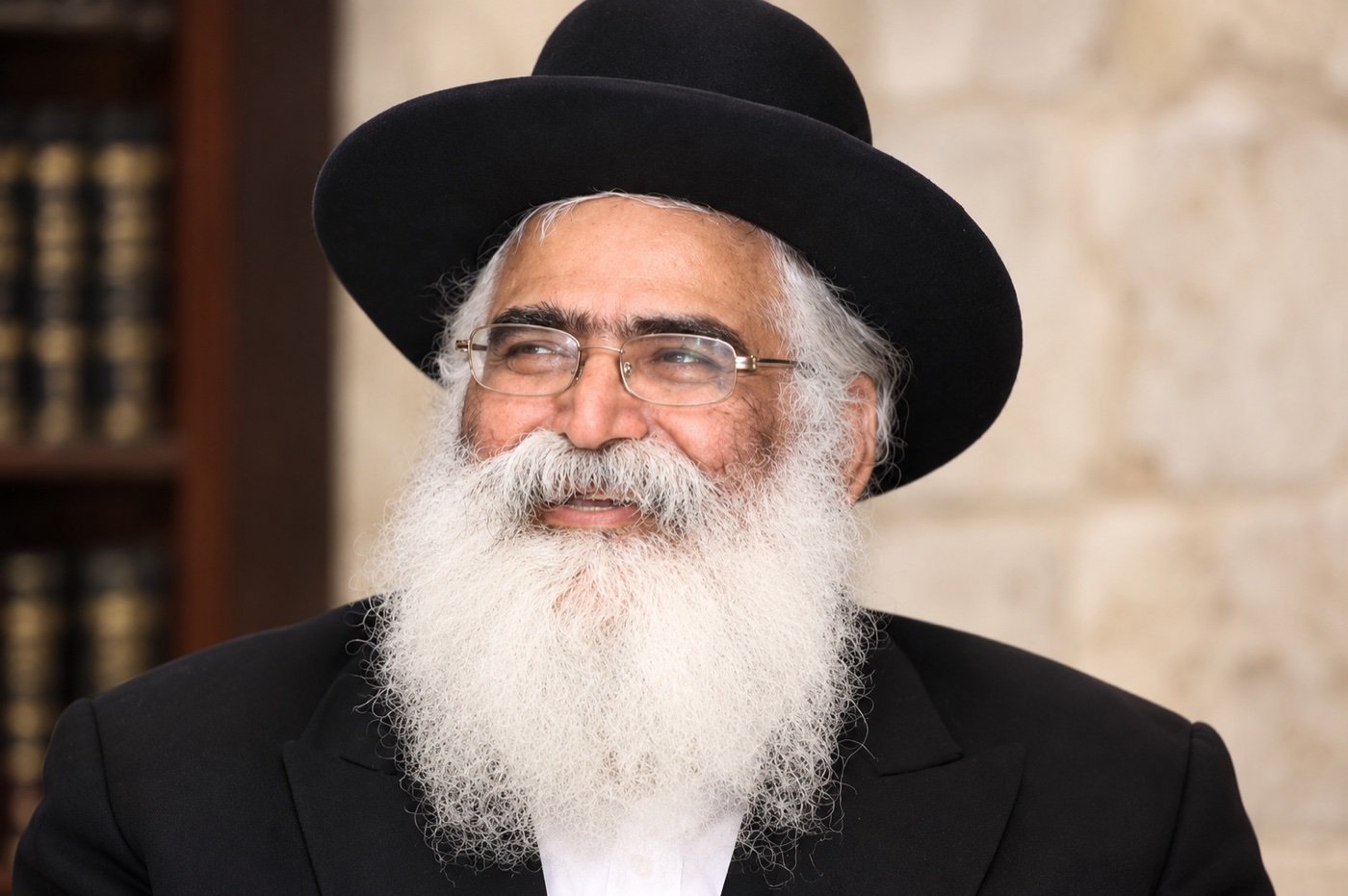
A story about Rav Yoram
How far the importance of a person guarding himself from spiritual harm reaches, our father and teacher, Rav Yoram Abergel zy”a, testifies:
“If you remember, in the past, in the years 5763–5764, many kollelim closed because they could not meet their budgets, and I saw it as my duty to stand in the breach and to expand our yeshiva, to add many more avrechim. Baruch Hashem, there are good people abroad who loved us and called on me to come to them, and there they would give me large donations for the kollel to support avrechim.
“And indeed I traveled to them several times, five or six flights, and afterwards I stopped going abroad; for many years now I have not seen what the airport looks like. And people ask me why I stopped this – after all, the wealthy people there want to donate, and it could greatly benefit our kollel?
“I told them: you are right, abroad one can obtain a lot of money for the kollel, but what prevents me from flying abroad is the great difficulty of guarding the eyes in those places! It is not easy to remain a ben Torah there!
“At the airport there are crowds of men and women intermingled, lacking modesty, and I had to close my eyes for hours, or have people stand around me in closed circles. And if it happened that I came across something not good, it was already impossible to pray or to read anything, for one who has never seen anything bad in his life is not able to be in such places.
“Therefore I gave up all these pleasures and decided that I would no longer fly abroad. And in return, Hashem Yitbarach opened the hearts of the people of Israel here in the Land. People who earn five or six thousand shekels give a thousand shekels; people who earn fifteen thousand give one thousand five hundred shekels; and those who earn twenty thousand shekels give two thousand shekels – it truly keeps on increasing… They take from their own homes and give to us, and this money is purer, of cleaner hands and more genuine.”
On the greatness of guarding oneself from sin, Rabbeinu spoke in the book “Imrei Noam” on Parashat Vayeshev
In the merit of Yosef’s steadfast stand in that tremendous trial with the wife of Potiphar, not only did he benefit himself, meriting thereby to reign for eighty years (the numerical value of “Yesod”), but he also benefited thereby all the people of Israel in the generations to come, and imparted to them strength and fortitude of soul to overcome every trial that would come to them in the matter of guarding the holiness of the covenant (the holiness of Yesod).
And so it is brought in the Midrash: Sarah our mother went down to Egypt and fenced herself off from immorality, and all the women were fenced off in her merit. Yosef went down to Egypt and fenced himself off from immorality, and Israel were fenced off in his merit.
That is, in the merit of Sarah our mother’s guarding her holiness when she was taken to Pharaoh’s house, all the daughters of Israel had the strength to guard their holiness and modesty while they were in Egypt. And in the merit of Yosef’s guarding his holiness throughout all the years he was in Egypt in general, and in the trial of Potiphar’s wife in particular, all the sons of Israel had the strength to guard their holiness in Egypt.
From this every person should learn how necessary his effort to guard his own holiness is – not only for his own sake, but also for the sake of his dear sons and daughters. And the more the parents guard their holiness, the more they impart to their offspring after them strength and courage to overcome every trial and to guard their holiness well, in whatever place and situation there may be in the world.
Every person should learn from Yosef HaTzaddik to overcome with all his strength every trial that comes before him in the matter of guarding his holiness, and to be firm in his resolve not to be enticed into a transgression, Heaven forbid.
Heaven forbid that a person should sin with the intention of doing teshuvah
Heaven forbid that a person should blemish his holiness from the outset, relying on various sayings such as “there is no despair” and the like. For “whoever says, ‘I will sin and then repent,’ is not given the opportunity to do teshuvah.” As the Alter Rebbe explains, this means that “his hand is not strengthened to have a favorable moment to do teshuvah,” and he is denied that assistance from Heaven which is given to anyone who comes to purify himself. For teshuvah is what causes him to sin; therefore Hashem removes from him that which causes him to sin, and does not assist him from Heaven to do teshuvah.
One must not be like that foolish pietist of whom the Gemara relates that once he solicited a woman to sin, and when she told him that in that city there was no mikveh and he would have nowhere to immerse after the transgression, he immediately fled for his life. This foolish pietist turned the mikveh into the cause of the transgression; in his case it would be better that he not immerse at all, and perhaps that way he would stop sinning.
One must know clearly that when our holy teacher, Rabbi Nachman of Breslov zy“a, said that the recitation of the “Tikkun HaKlali” that he revealed to the world is capable of rectifying the blemish of the covenant, his intention was only for one who from now on does not want to blemish himself in any way in the world. But one who deliberately, from the outset, blemishes himself and relies on the fact that afterwards he will immerse in a mikveh and recite the “Tikkun HaKlali,” will not merit any rectification at all. For it is forbidden to turn the “Tikkun HaKlali” into the cause of the sin, since then it will lose its effectiveness and its special power.
Reading and studying the holy Zohar is a proven aid for guarding holiness
Now, twice “Yosef” equals in gematria twelve times the Name Havayah, and it also equals the gematria of “Shabi,” which is the acronym of the name of the holy Tanna Rabbi Shimon bar Yochai, author of the Zohar. This alludes to the fact that reading and studying the holy Zohar is very effective in helping a person guard his holiness throughout all twelve hours of the day and twelve hours of the night.
Therefore, in the lands of the Eastern communities, holiness and modesty were so fixed in their souls that they were ashamed even to speak of these topics in public. For in those places there was a special love for reading and studying the Zohar, and everyone had a fixed daily practice of reciting several pages of Zohar, and the holiness of the Zohar instilled in them great holiness.
In conclusion: fortunate and blessed is the portion of everyone who merits to guard his holiness completely. There is no level like his level; he is most beloved before Hashem, and there will be fulfilled in him what is said of Yosef HaTzaddik after he withstood the trial of Potiphar’s wife: “And Hashem was with Yosef, and extended kindness to him… and whatever he did, Hashem made it succeed” (Bereshit 39:21–23).
In brief
a. Yosef HaTzaddik, by standing firm in his trial, gave all the people of Israel the merit to overcome trials in guarding holiness. From him we should learn how much the effort to guard holiness benefits not only the person himself but also his descendants after him.
b. Heaven forbid that a person should sin with the intention of doing teshuvah, turning the rectification into the cause of the sin. Teshuvah helps only one who has turned back from it completely and does not want to blemish himself in any way in the world.
c. Reading and studying the holy Zohar is a proven aid (segulah) for guarding holiness. Therefore it was customary in the lands of the Eastern communities, where holiness and modesty were so fixed in their souls that they were ashamed to speak of these topics in public.